As a timeless cross-scene staple, men’s polo shirts have evolved beyond basic attire to embody functionality, sustainability, and style. 2025 marks a pivotal year for industry transformation, driven by consumer upgrades and technological innovation. This report distills core insights to guide B2B apparel brands, manufacturers, and buyers.
I. Market Status: Growth with Challenges
The global men’s polo shirt market is set to reach RMB 45.416 billion in 2025, with China accounting for RMB 18.439 billion of this share . As the world’s largest producer and exporter, China dominates global supply chains, while the Asia-Pacific region leads growth through 2028 . Online sales now represent 70% of the market, fueled by social commerce and live streaming .
Key industry pain points persist: homogenization leads to price wars; traditional cotton polos face seasonal demand fluctuations; most manufacturers rely on OEM/ODM orders with weak brand influence; and quality issues like inconsistent sizing hinder B2B procurement .
II. 2025 Core Trends
1. Performance & Sustainable Fabrics
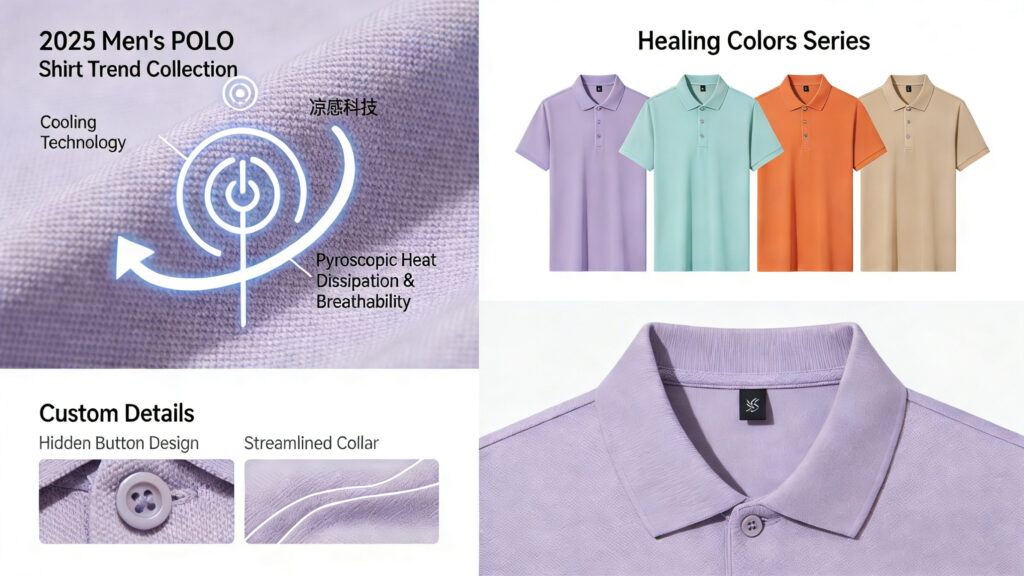
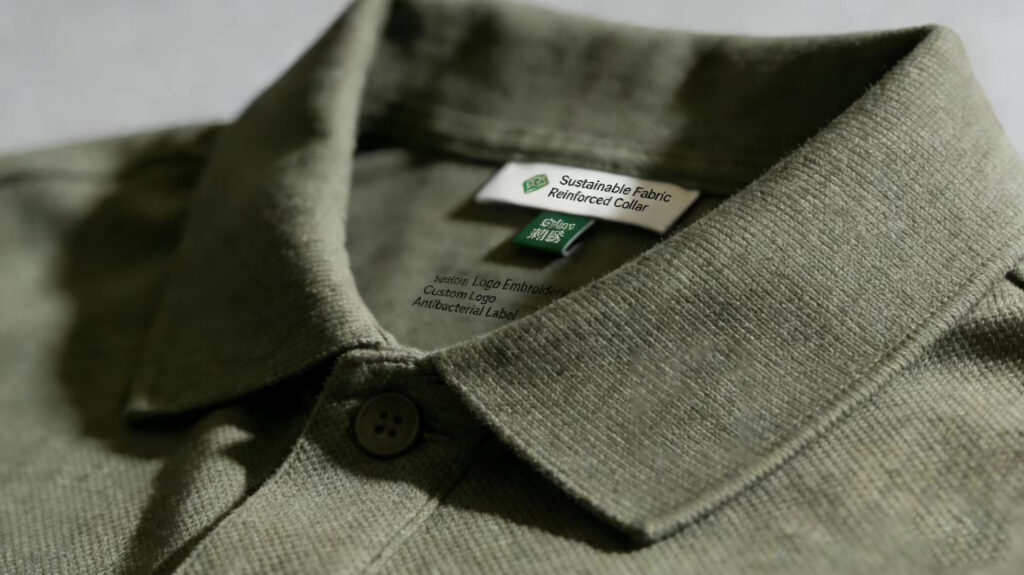
Consumer demand drives adoption of high-performance materials: cooling ice oxygen cotton and polyester-spandex blends with q-max ≥0.15 deliver instant coolness . Organic cotton and recycled polyester gain traction—62% of Western consumers pay 10%+ premiums for eco-friendly options . Multi-functional integration (antibacterial, wrinkle-resistant, stretch) becomes standard, with ≥3-level pilling resistance required .
2. Design Evolution
Low-saturation “healing colors” (lavender, mint green, earthy hues) replace traditional black and gray, balancing sophistication and approachability . Silhouette innovations include oversized fits and tailored cuts, while subtle details like reinforced collars and hidden button plackets enhance quality perception .
3. Customization & Supply Chain Upgrades
OEM/ODM manufacturers now offer custom logos and fabric choices with lowered MOQs . Smart manufacturing (digital printing, intelligent production lines) reduces lead times, while GOTS and OEKO-TEX certified sustainable production becomes mandatory for high-end markets .
III. B2B Procurement Insights
1. Regional Demand
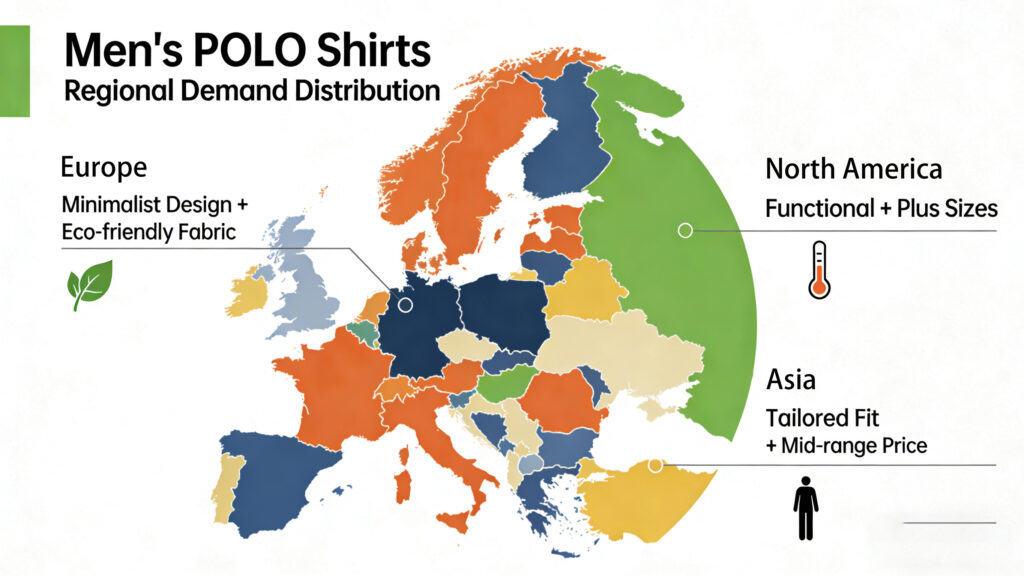
– Europe: Prioritizes minimalism and eco-friendly fabrics (40% penetration) .
– North America: Focuses on UV protection, moisture-wicking, and extended sizes (M-6XL) .
– Asia: Values tailored fits and mid-range prices ($30–80) .
– Southeast Asia: Price-sensitive, favoring loose fits in the $10–25 range .
2. Core Requirements
Quality checkpoints include fabric composition (polyester ≥80%, spandex ≥3%), collar stability, and shrinkage resistance . Sample delivery within 7–10 days and on-time bulk delivery are critical for winning orders .
IV. Outlook & Recommendations
The global market will grow at a CAGR of 1.88%, reaching RMB 51.741 billion by 2032 . The high-end segment (above $50) will expand fastest at 4.2%, with functional/sustainable products capturing 60% of market share by 2030 .
– Manufacturers: Invest in fabric R&D and smart production; obtain eco-certifications .
– Brands/Buyers: Collaborate with certified partners; leverage customization for differentiation .
Conclusion
2025 demands men’s polo shirts to balance functionality, sustainability, and personalization. For B2B players, adapting to these trends is key to success. As the polo evolves into a fusion of technology and style, it unlocks new opportunities for the global apparel supply chain.
Looking for reliable OEM/ODM partners? Our factory specializes in functional, sustainable men’s polos with MOQ 500pcs and 7-day sample delivery. We hold GOTS and OEKO-TEX certifications—contact us for a free quote!